AI Didn't Reduce Your Workload. It Moved It.
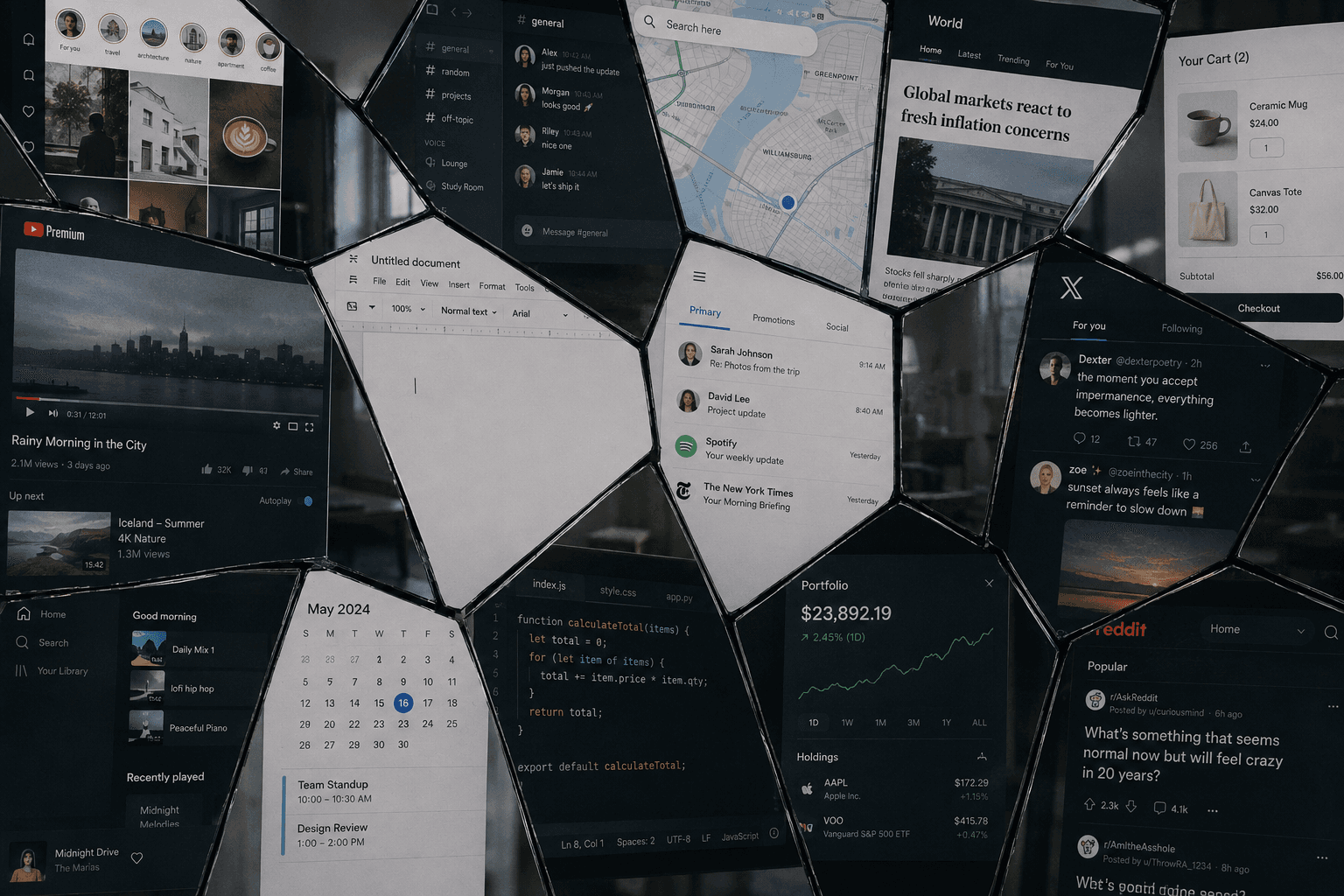
Technology has been pulling the same trick on us for two hundred years. It never makes the work disappear. It just changes whose hands it's in, and it does that while looking like a favor.
AI is running that play faster than anything before it. Every new tool promises to take something off your plate and it genuinely does, for exactly one layer, and then it hands you a new interface to learn, a new workflow to maintain, another subscription to weigh, and a steady stream of outputs you have to read and correct. The overhead doesn't disappear so much as change clothes.
You can watch the whole thing happen inside one person's setup: Notion to organize, ChatGPT or Claude to think, Granola for the meetings, Wispr for voice, a couple more for capture and recall. Every one of them is genuinely good at its job. Put them together and they invent a brand new one, which is managing the tools that were supposed to be saving you time.
That's not a second brain. That's a second job.
And this isn't an anti-AI take, to be clear. The tools really are powerful. But power and relief are different things, and most people right now have plenty of the first and almost none of the second, which is how you end up more capable and more loaded at the same time. Most of us are.
So the question was never which AI tool to add next. It's whether everything you're already running is actually making your mind quieter, or just making the overhead look more impressive.
That's what we're building Roma for. The answer to too many tabs was never a better tab manager. It's fewer tabs.